|
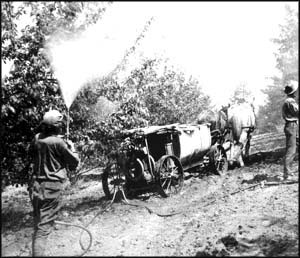
Another major change in orchard practices is the switch to dwarf varieties of trees. In the old days, most trees were over twenty feet high, and orchards could only contain about 100 full-sized trees per acre. Now, the majority of trees planted are dwarf varieties. These dwarf trees do not grow much higher than seven or eight feet, making them especially easy to prune, spray, and pick. In addition, 600 to 800 dwarf trees can be planted per acre. Dwarf trees give more apples per acre, and usually, more apples mean more profits for the growers. The miniature trees also start producing fruit within two to three years of planting, compared to the old, full-sized varieties that took four to six years. However, dwarf trees are unable to support their own weight, so orchardists must support them with expensive posts and wire. Still, the number of acres in dwarf apple trees increases every year. Technological Changes Technological changes have also brought improvements to the apple industry and helped to increase yields. Holes for apple trees used to be dug by hand. In 1958, when Art Rogers planted his 6 ½ acre (2.6 hectare) orchard, he dug over 600 holes by hand. Now, a post-digging machine digs the holes. At the turn of the last century, most orchard work was done manually with the help of horses. Now gas-powered tractors do most of the work. In the past, spraying was all done by hand.
|