|
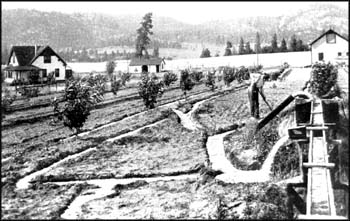
Early irrigation consisted of damming creeks at higher elevations and then using pipes and flumes made of wood to carry water to the orchards. Ditches were dug between the rows of apple trees so the water could flow directly to the tree roots. This method wasted a great deal of water because of leakage from the pipes and evaporation from the open ditches. Later, pipes were made of steel or cast iron which did not waste as much water. Nowadays, most orchardists use plastic underground pipes. These pipes are connected to pressurized irrigation district water lines. The pressurized system forces water through the pipes, and then the water is available to the sprinklers on demand. Some orchards still have 10 to 12 foot high (3 - 3.7 metres) sprinklers that spray water on top of the trees. Other orchardists have installed the most recent irrigation method—the microjet system. With the microject system, plastic sprinkler pipes extend just 12 inches (30.5 centimetres) above the ground spraying a light mist to individual trees. This misting system is more cost effective because there is not much water lost to evaporation. With increasing water costs, orchardists continually strive to conserve water. |